Architect high-impact teams
teaming Solutions
Districts Call us when…
What if your cabinet leadership team functioned as a true leadership engine—unified, strategic, and laser-focused on what matters most?
What would students and educators feel, see, and achieve if every campus leadership team led with clarity, confidence, and a deep sense of shared purpose?
When teams work, everything works.
Strong teams don’t just execute well—they create a force multiplier. They accelerate progress, strengthen culture, and enable sustainable success across an entire system.
In fact, no one ever complains about being on a high-functioning, cohesive team. Being part of a great team feels like a gift—energizing, empowering, and deeply rewarding.

But here’s the truth:
Most teams aren’t there yet.
What percentage of teams do you think are highly effective and engaged—consistently performing at a high level with strong collaboration and morale?
(Hint: According to a Gallup study, it’s lower than most leaders expect.)
What percentage of cross-functional teams do you think are dysfunctional—failing to meet key criteria like staying on schedule, meeting budget, delivering quality, satisfying stakeholders, or aligning with organizational goals?
(According to Harvard Business Review, the number might surprise you.)
Teams expand or constrict culture, performance, and impact.
At a time when districts are being asked to do more with fewer resources, building strong teams isn’t a “nice to have”—it’s a strategic imperative.
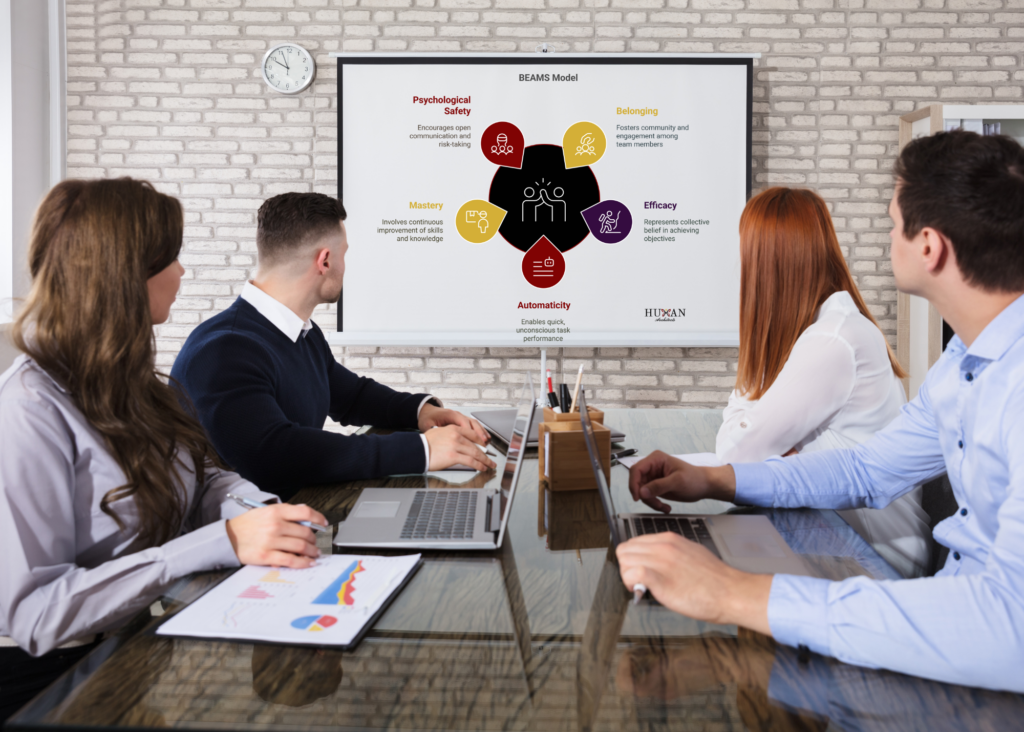
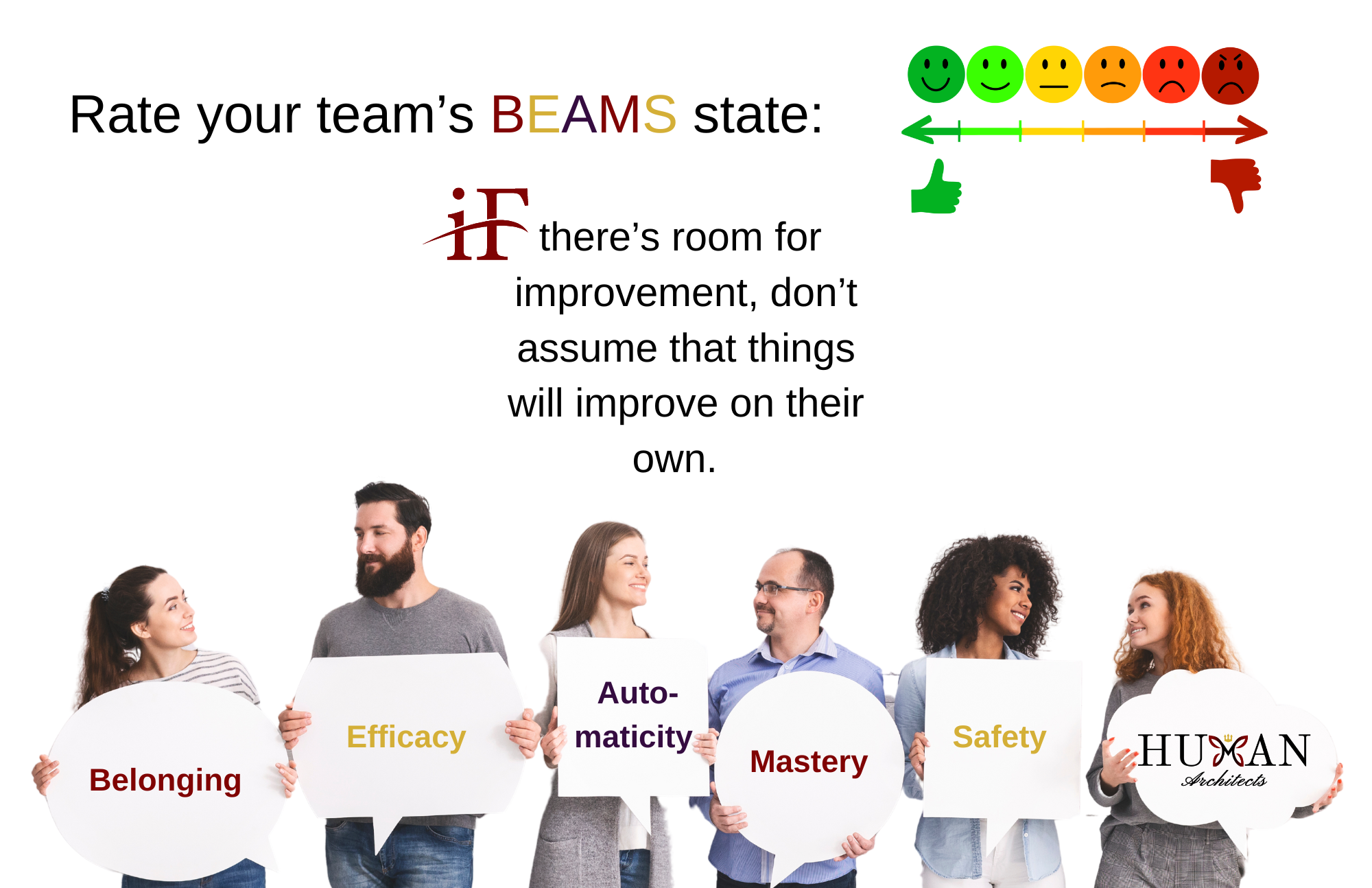
How would your team score on our BEAMS model?
Our
BEAMS MODEL
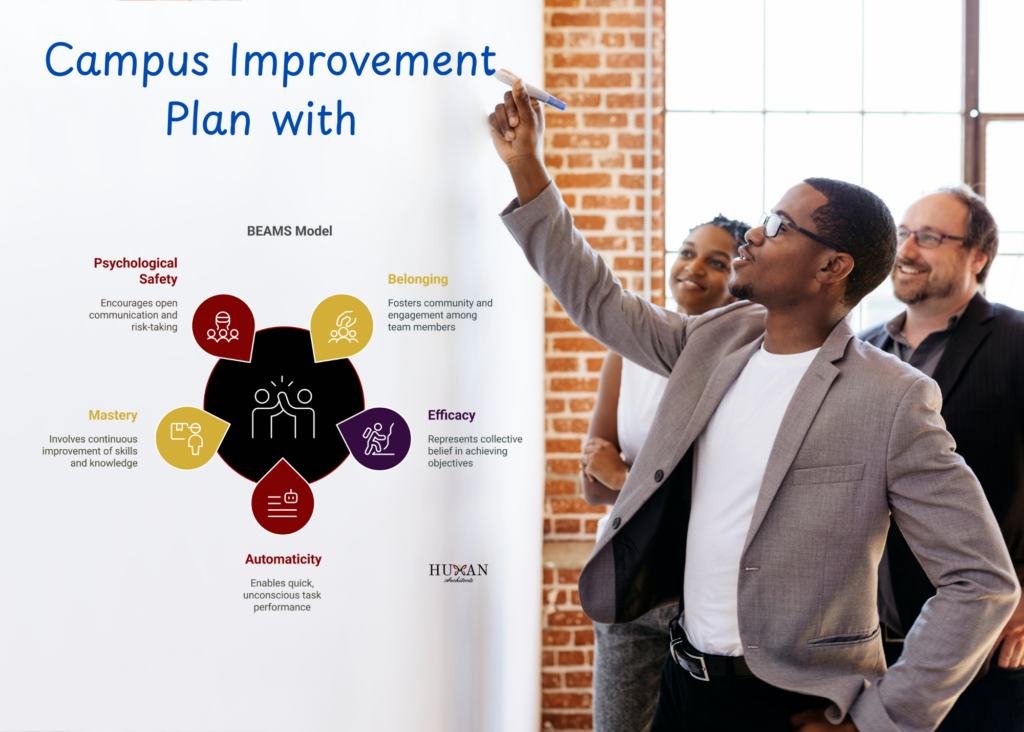
The BEAMS Model captures the essential dimensions that must be cultivated to positively influence culture, strengthen organizational performance, and accelerate collective impact.

Belonging
Belonging in the workplace is the sense of being accepted, valued, and included by colleagues and the organization as a whole. It means employees feel they are part of a supportive team where their contributions are recognized, their individuality is respected, and they can fully participate without fear of exclusion or discrimination. This sense of belonging fosters a positive work environment, enhances employee engagement, and drives organizational success.
Efficacy
Efficacy in the workplace or teams refers to the ability of employees or team members to produce desired results and achieve goals effectively. It encompasses the confidence individuals have in their own abilities, as well as the collective capability of the team to execute tasks and overcome challenges. High efficacy leads to increased productivity, better problem-solving, and greater overall performance within the organization.
Automaticity
Automaticity in the workplace refers to the ability of systems, processes, and decision-making frameworks to operate efficiently and effectively with minimal human intervention. It involves creating workflows that streamline routine tasks, allowing employees to focus on higher-level strategic activities. By leveraging automation, organizations can enhance productivity, reduce errors, and ensure consistent outcomes across various functions.
Mastery
Mastery in the workplace refers to the continuous development of skills and knowledge through various means, including learning from team members, formal training, and hands-on experience. It involves striving for excellence in one’s role, seeking feedback, collaborating with colleagues to gain new insights, and applying best practices. This commitment to growth not only enhances individual performance but also contributes to the overall success and innovation of the team and organization.
Safety
Psychological safety in the workplace is the belief that one can speak up, take risks, and make mistakes without fear of punishment, humiliation, or negative consequences. It fosters an environment where employees feel valued, respected, and confident to express their ideas, concerns, and questions openly. This sense of safety encourages collaboration, creativity, and innovation, leading to improved team dynamics and overall organizational performance.
Now is the time to architect high-impact teaming across your district.
People partner with us because…
One conversation. One plan. A legacy of greatness awaits.
Let’s explore potential. We would love to learn more about you, your district, and the goals you will attain despite the current contingencies.